[[title quote from: Dr. Boris Lushniak, Acting Surgeon General]]
November was a crazy month, especially during the weeks before and after the American Public Health Association’s Annual Meeting in New Orleans. The amount of tea imbibed, chocolate consumed, late nights pulled, and overall lack of free time reminded me of a lesson in the difference between acknowledging one’s limits versus “giving up” a few years ago. While I can already see the payoff of my hard work this semester, I had to shelve some projects and goals because I was out of energy and time. Thanksgiving break was spent re-evaluating priorities, and I am looking forward to having a clean slate next semester to try out my new plan. One reminder is to not automatically say yes to new things that crops up. While there are merits to being open to new opportunities and I understand my inclination to want to cram in as many experiences as possible before graduating in May, I also think that I am now at the point where I need to exercise the power of “no” more often.
I also caught up on reading over the break and enjoyed the first book of Brandon Sanderson’s Mistborn trilogy. There’s also this interesting article about the benefits of reading fiction. I haven’t taken a closer look at the science behind it — but I’ll accept anything that supports my book addiction. 😉 My non-fiction book recommendation for the month is Banerjee and Duflo’s Poor Economics. One of the things that I like the most about being a public health major is how varied our academic options are, and how what we learn can be applied to so many real-world issues (such as global poverty and development economics, as discussed in Poor Economics). I’ve found it much easier to talk to people from different backgrounds ever since I switched majors.
I also wanted to reflect on my experience at APHA 2014 in New Orleans. I submitted an article to APHA’s student newsletter, but also wanted to take the time to write out some thoughts that I didn’t include in my article for the sake of length.
If you told me as a freshman that one of my favorite college memories would be my experiences at a public health annual conference, it would have been gibberish to me. Back then, I was enrolled in an accelerated PharmD program and had never heard of public health. Over time, I got involved in several public health outreach programs and realized that I wanted to focus more on prevention than treatment. I also felt more inclined toward studying healthcare from a systems-perspective than being involved in individual patient care. As former Surgeon General Dr. Joycelyn Elders declared, “The USA has the best sick care system in the world, but we need a health care system.”
The conference opened with a Saturday session by the Student Assembly, where our first group discussion was about how the Ferguson protests aren’t just about justice — they also involve health disparities and economic disparities. One insight was that the solution to issues like putting gun violence on the public health agenda needs to come from us. We cannot depend on government assistance, especially as budgets continue to be cut. (One of the surgeon generals on Monday’s panel declared, “Leadership in public health does not require Senate confirmation”).
Subsequently, the students had the option to travel to one out of three possible sites in the surrounding community to learn from agencies whose work is dedicated to the re-building and growth of New Orleans: The Goldring Center for Culinary Medicine, NO/AIDS Task Force, or Jericho Road. I chose to visit Tulane’s Goldring Center for Culinary Medicine, which is the first teaching kitchen integrated into a medical school. By providing medical students with a hands-on education in culinary arts, their goal is to enable these future doctors to better address the nutritional needs of patients. The program gives them the tools to walk the walk when counseling patients about making lifestyle changes.
For those interested in nonprofit management, The Goldring Center was also an intriguing case study for what a successful partnership looks like, as it works closely with the neighboring Whole Foods and Liberty’s Kitchen. What is unique about the Whole Foods store on Broad St is its leadership in the ReFresh Project, which aims to improve access to fresh food and healthy initiatives in the New Orleans community. For instance, to help support the coffee business run by Liberty’s Kitchen (which provides workforce training for vulnerable youth), this Whole Foods chose not to install a coffee bar. They also use the red beans and rice from Liberty’s Kitchen as the base for their vegetarian gumbo. After picking apart the pitfalls of failed partnerships in my nonprofit management class at Rutgers, it was interesting to learn about the success story of three socially innovative organizations that achieved a mutually beneficial relationship to help address health disparities. Visiting The Goldring Center was a reminder of the power of community organization, which is essential to many public health initiatives.

APHA 2014 offered a vast array of learning opportunities. From meeting leaders in the Health Administration section at 7am on Sunday morning to hearing from a panel of six Surgeon Generals, there was a dizzying amount of information to take in. My strategy to absorb as much as possible was to take a few minutes after each session to write down one key thing that I learned. With all of the stimuli at a bustling meeting like APHA, I wanted to ensure that I had one main takeaway that I could continue to reflect on after returning to regular life in New Jersey. Another tip for future attendees (besides packing plenty of snacks) is to have a plan to make the most of the conference experience. APHA is a behemoth organization, and it’s easy to become overwhelmed. APHA’s phone app was a useful tool for planning a schedule, but allow some room for spontaneity as well. Striking up conversations with other attendees was a good way to learn about other opportunities that weren’t originally on my list. I also found it helpful to jot notes on the backs of the business cards I received, in order to better remember who everybody was and what we shared in common.
For fellow introverts who may be reading this and worry about attending gigantic conferences like APHA: Don’t be afraid to say hi to someone. (This sounds more easily said than done, but what worked for me was making a point to not overthink it. The more I hesitated, the harder it was to say hello). I tried to strike up conversations with the people tabling the booths in the Expo Hall, rather than just grabbing freebies or asking the usual questions. There were some expressions of surprise (“Oh, how nice of you to introduce yourself! I wasn’t expecting that.”) As an anxiety-prone introvert, I really appreciated the positive feedback.
Also, despite the pressure to make good use of limited time, it’s okay to take a quiet night to yourself. I did not explore New Orleans as much as I would have liked due to fatigue, but it’s important to take time during the evening to recharge for another day at the conference. I used my alone time to read and organize notes from the day.
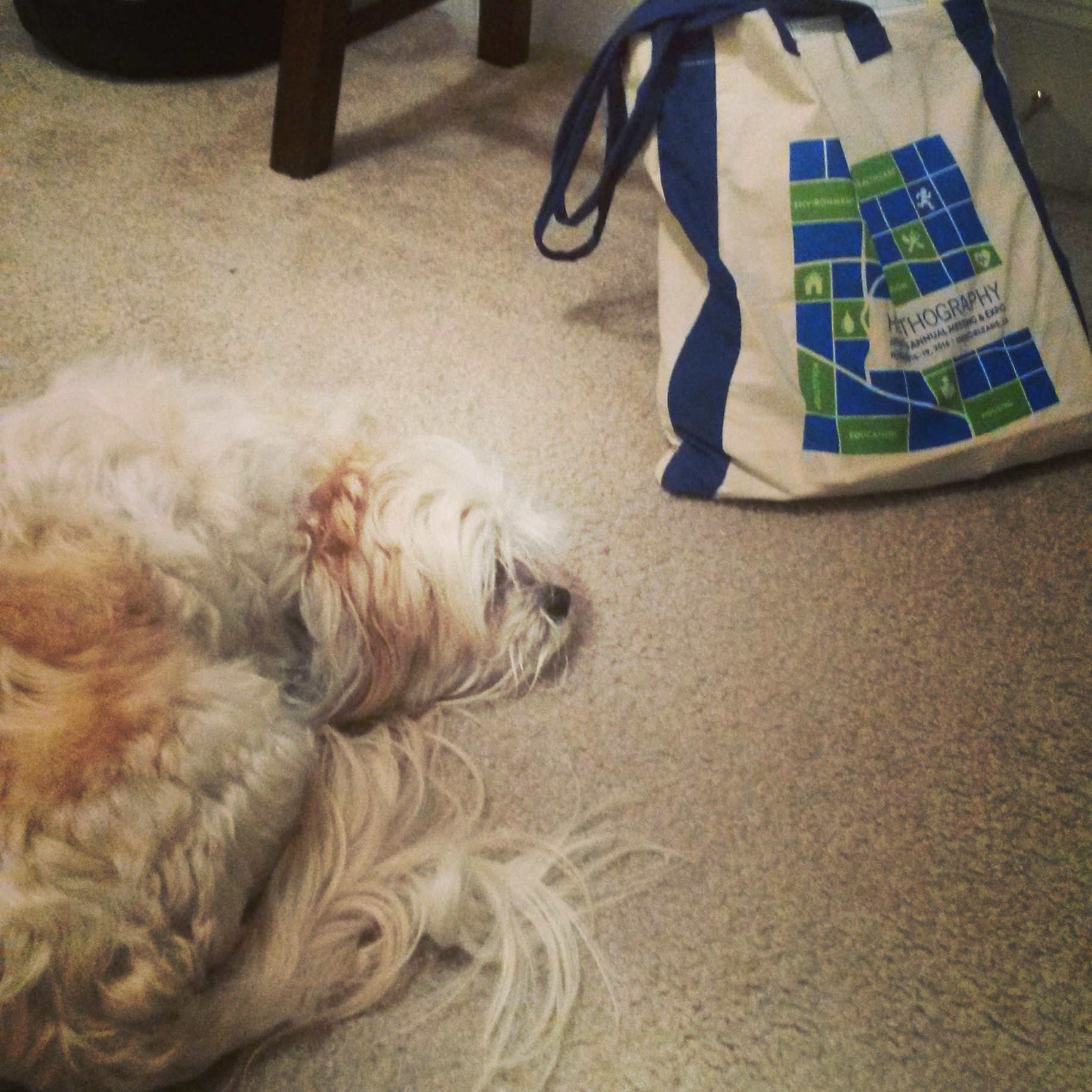
Airbnb was also a helpful way to save on conference costs. There are a lot of highly rated hosts to choose from in major cities like New Orleans. I stayed in an apartment that was a ~6 minute taxi drive away from the convention center, which saved me over $500 compared to a hotel. As an added perk, I was greeted every evening by this adorable dog. One of the first things I missed when I returned home to NJ was his enthusiastic welcome.

Meet Ace! He always raced to the door of my room upon hearing it close and sat outside despondently until I opened it again….so I had some fluffy company while packing.
It was an honor to be selected as a scholarship recipient by the Student Assembly, and I hope to attend again in the future as a graduate student and early-career professional. Thank you to Dr. Lyndon Haviland and Dr. Ayman El-Mohandes for their generosity in sponsoring the scholarship – hopefully I will be able to follow in the footsteps of the public health giants that I met at APHA 2014!

 Sonia Lee